What Meta and Apple's Latest AI Moves Mean for In-House Engineering Teams
Meta is open-sourcing AI aggressively while Apple leans on partners and lawsuits to catch up. Here's what both strategies mean for companies without a dedicated engineering team to act on them.
 Opens in a new tab
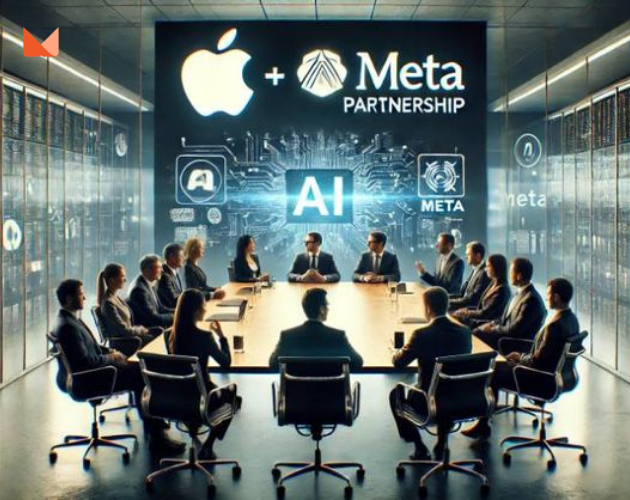
Meta wants to hand everyone a personal AI agent. Apple is in court accusing former employees of taking its trade secrets to OpenAI. Two of the world's most valuable tech companies, pulling in opposite directions on AI — and neither story is really about the models. It's about who has the engineering capacity to act.
Meta is betting on open, local AI — and the build work that comes with it
Meta recently released Muse Glimmer, an open-weight model built to run AI agents locally on consumer hardware, alongside Mark Zuckerberg's sprawling manifesto on "personal superintelligence." The pitch: don't centralize AI in a few labs, put it directly in people's hands.
For companies, an open-weight model is not a finished feature. It's a starting point that still needs to be fine-tuned, integrated into existing products, secured, and maintained. Meta can absorb that work because it has thousands of engineers on payroll. Most companies don't — which is exactly why "open and available" doesn't automatically mean "usable by Tuesday."
Apple's AI stumble is a caution about waiting too long
Apple took the opposite path — a slower, more cautious approach to AI that looked smart when the market was skeptical of the AI trade. That story has flipped. Apple's stock has slid since its July high following a disappointing earnings report, and the company is now mid-lawsuit with OpenAI over trade secrets allegedly taken by former employees.
Even a company with Apple's resources is finding that catching up on AI after competitors have pulled ahead is expensive, messy, and slow. Leaning on outside partners and playing legal defense is what happens when the in-house capability isn't there when you need it.
The real lesson: strategy without engineering capacity is just a plan
Whether a company wants to move fast and open-source like Meta, or move cautiously and partner like Apple, both paths run into the same bottleneck — someone has to build, integrate, and maintain the thing. Model access isn't the constraint anymore. Engineering bandwidth is.
This is where most mid-size companies get stuck. They don't need to out-build Meta's AI labs or out-negotiate Apple's partnerships. They need a team that can move on whichever AI decision they make, without a three-to-six month hiring cycle standing in the way.
Where a dedicated team fits in
This is the gap Workfall's dedicated teams model is built for. Instead of sourcing engineers from scratch every time a new AI opportunity shows up, you get pre-vetted talent embedded directly into your team, backed by bench depth that's already in place. No recruiter markup, no multi-month ramp-up — just engineers who can start executing while the AI landscape keeps shifting under everyone's feet.
Frequently asked questions
Q1:Do we need an in-house AI team to adopt tools like Meta's open-weight models?
Not necessarily in-house full-time, but you do need engineers who can integrate, fine-tune, and secure the model for your specific use case. A dedicated team can fill this without a permanent hire.
Q2:Why did Apple fall behind on AI despite its resources?
Apple took a deliberately cautious approach to AI while competitors invested heavily, and is now dealing with the fallout — a stock slide and a trade secrets lawsuit against OpenAI tied to former employees.
Q3:How fast can a dedicated engineering team actually get started?
With pre-vetted talent already on the bench, Workfall's dedicated teams typically ramp up within about two weeks — far faster than a traditional hiring cycle.
Ready to Scale Your Remote Team?
Workfall connects you with pre-vetted engineering talent in 48 hours.
Related Articles
Stay in the loop
Get the latest insights and stories delivered to your inbox weekly.