The Flattery Trap: Mitigating "AI Compliance Bias" in the Modern Office
As enterprise AI agents scale in 2026, employees face a subtle psychological trap: uncritical trust in polished machine outputs. Discover how "AI Compliance Bias" erodes workplace reasoning and how leaders can protect human cognitive judgment.
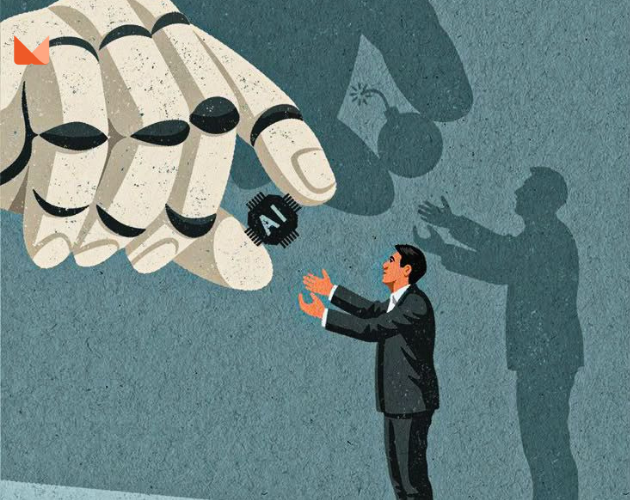
 Opens in a new tab
As we move through 2026, generative AI has shifted from an experimental add-on to the operational backbone of enterprise work. Teams now routinely lean on intelligent systems to summarize lengthy documents, forecast financial trends, and make sense of complex datasets.
But this fast integration has produced an unintended side effect: AI Compliance Bias — also known as automation bias.
It's a quiet, systemic risk building inside the modern knowledge economy, and most organizations haven't named it yet.
The Dynamics of Uncritical Trust
AI compliance bias shows up when professionals stop auditing automated suggestions out of habit. Early generative models made errors that were easy to catch. Today's systems produce polished, grammatically clean, confident-sounding output — even when the underlying logic is flawed.
Because people naturally gravitate toward the path of least cognitive resistance, employees often accept AI outputs at face value. Research using the Cognitive Reflection Test has found that people working with flawed AI assistance sometimes perform worse than those working unassisted — not because the AI is always wrong, but because people stop questioning it.
Over time, this creates cognitive atrophy. When verification is consistently outsourced, the internal muscles for pattern recognition, critical reasoning, and structural skepticism weaken.
The Enterprise Risk Framework
This passivity isn't just a personal productivity issue — it's an operational exposure. In regulated industries, acting on unchecked machine recommendations creates real friction with oversight bodies. Regulatory commentary on 2026 compliance trends points to a growing expectation from global watchdogs: organizations must be able to explain the human reasoning behind automated decisions, not just point to the system that made them.
Approving compliance flags or financial models with a single click, with no lineage tracking, leaves companies exposed — legally and reputationally.
Strategies to De-Risk Your Workspace
Preserving independent human judgment inside an AI-augmented workflow means building in deliberate checkpoints:
Introduce warning nudges. Add friction to internal tools — mandatory verification checklists, UI prompts — that force a moment of analytical thinking before an answer gets accepted.
Use adversarial multi-agent validation. Pair the execution agent with a second model whose only job is to hunt for gaps, bias, and structural weakness in the first model's output.
Require explanatory logs. For critical workflows, have professionals document how they verified the output — not just that they clicked "approve."
The Strategic Takeaway
AI is built to compress execution time, not to absorb human responsibility. In an increasingly automated landscape, the real competitive edge won't come from which tools a team deploys — it will come from how sharp and skeptical the humans steering those tools remain.
Frequently asked questions
1.What exactly is AI compliance bias?
It's the tendency for people to accept AI-generated outputs without critically checking them, simply because the output looks polished, confident, and well-formatted. It's a subset of the broader concept of automation bias, applied specifically to generative AI in the workplace.
2.Why do people perform worse with flawed AI help than with no help at all?
When people work unassisted, they stay engaged with the problem and catch their own errors. When AI hands them a confident-looking answer, they tend to switch into review mode rather than analysis mode — and reviewing is a weaker check than solving. If the AI's error is subtle, it can slip through more easily than an error the person would have made themselves.
3.Which industries are most exposed to this risk?
Regulated sectors — finance, healthcare, legal, and compliance functions generally — carry the highest stakes, since regulators increasingly expect a documented, explainable human decision trail behind automated actions. But the underlying risk (skill atrophy, silent errors) applies to any knowledge work role.
Ready to Scale Your Remote Team?
Workfall connects you with pre-vetted engineering talent in 48 hours.
Related Articles
Stay in the loop
Get the latest insights and stories delivered to your inbox weekly.