AI and Skills-Based Hiring in 2026: What's Actually Changing the Way Companies Hire
An inside look at 2026's biggest hiring shift — from degree-first to skills-first recruitment — and how AI is being used (and misused) to screen, match, and hire talent faster.
 Opens in a new tab
The Hiring Playbook Is Being Rewritten
If you've hired anyone this year, you've probably felt it: the old rules don't quite work anymore. Degrees carry less weight. AI is on both sides of the hiring table. And the gap between companies who've adapted and companies still running 2020-era hiring processes is widening fast.
Here's what's actually driving the shift in 2026 — and what it means for how teams should be hiring right now.
1. Skills Are Replacing Degrees as the Real Filter
The biggest structural shift in hiring right now is the move away from credential-first screening. Close to two-thirds of companies now say they apply skills-based hiring practices when bringing on new employees, a significant jump from just a couple of years ago.
The logic is simple: a degree tells you what someone studied. A skills assessment tells you what they can actually do. Companies that have shifted to evaluating real capability — through project-based tasks, portfolio reviews, or working tryouts — are reporting access to a dramatically larger, more diverse talent pool than degree-first filtering ever allowed.
But this shift isn't automatic or easy. Defining which skills genuinely predict on-the-job performance is harder than it sounds. A candidate can test brilliantly in a narrow technical exercise and still struggle in a client-facing role or a cross-functional team where influence matters more than raw execution. Skills-based hiring works best when it's paired with clear scorecards and real intake conversations between hiring managers and recruiters — not treated as a shortcut that replaces judgment entirely.
2. AI Is Now Involved in Almost Every Hiring Decision
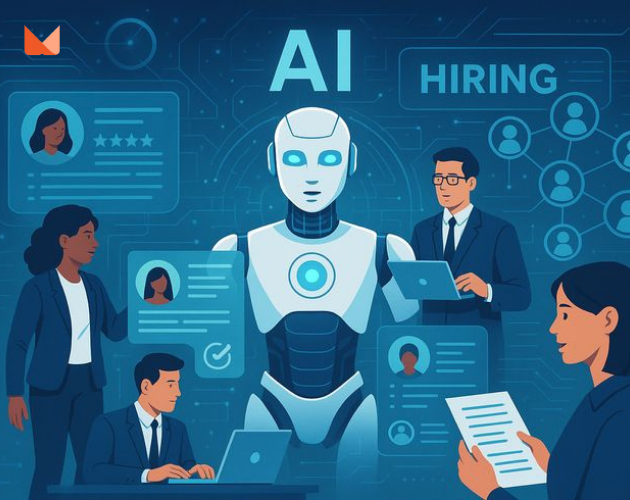
AI has moved from "nice to have" to default infrastructure in recruitment. The vast majority of companies now use some form of AI for initial candidate screening, and a strong majority plan to increase their investment in AI-driven recruitment tools this year.
It's not one-sided either — job seekers have adapted just as fast. Most candidates now use AI tools somewhere in their application process, and a majority of hiring managers use AI-detection software to catch it. The result is an odd arms race: AI writing applications, AI screening them, and both sides trying to out-maneuver the other.
Used well, AI genuinely helps. It can surface qualified candidates who'd otherwise get filtered out by rigid keyword matching, speed up early-stage screening, and free up recruiters to focus on judgment calls that actually need a human. Used carelessly, it just adds a faster, more opaque layer of noise on top of an already broken process.
3. Efficient Hiring and Impersonal Hiring Are Not the Same Thing
This is the trend most companies are getting wrong. There's a real difference between using AI to move faster behind the scenes and using it to disappear from the candidate experience entirely.
Candidates notice generic automated messages. They notice repetitive interview steps and confusing, robotic communication. The companies winning top talent in 2026 are the ones using AI to handle the operational load — scheduling, initial matching, routine follow-ups — while keeping the actual candidate-facing experience distinctly human.
4. The Talent Gap Isn't Closing on Its Own
Despite all the automation, a large share of employers still say they struggle to find qualified candidates. AI can widen the top of the funnel, but it can't manufacture skilled people who don't exist yet. Referral-based hires continue to close faster than candidates sourced any other way — a reminder that networks and trust still outperform pure algorithmic matching in a lot of cases.
What This Means If You're Hiring Right Now
Build a real skills framework, not just a checklist. Know exactly what "good" looks like for the role before you screen a single resume.
Use AI for speed, not judgment. Let it handle sourcing and scheduling; keep humans in the loop for anything that requires context or nuance.
Don't let automation replace candidate experience. Fast doesn't have to mean impersonal.
Lean on your network. Referrals and warm introductions are still converting faster than cold, algorithm-matched applications.
Frequently asked questions
Q1: Is skills-based hiring actually replacing degree requirements?
It's a fast-growing trend rather than a total replacement. A large and growing share of companies now weigh demonstrated skills more heavily than degrees, especially for roles facing talent shortages, but degrees still matter for certain regulated or specialized positions.
Q2: How much of recruitment is AI-driven now?
Most companies now use AI for at least initial candidate screening, and adoption is expected to keep growing through 2026. It's typically used for sourcing, resume screening, and scheduling rather than final hiring decisions.
Q3: Do job seekers use AI too?
Yes — a large majority of candidates now use AI tools somewhere in their application process, from resume writing to interview prep, which is part of why hiring teams have had to adapt their own screening methods.
Ready to Scale Your Remote Team?
Workfall connects you with pre-vetted engineering talent in 48 hours.
Related Articles
Stay in the loop
Get the latest insights and stories delivered to your inbox weekly.